
J D Vance heads to Islamabad for high-stakes US-Iran talks, balancing cautious optimism with a warning against bad faith. negotiations.

16 days into the war, US forces were already running out of ground-attack missiles and Israel is about to expend its entire Arrow interceptor missiles by end March. To be sure, the Iranians are watching closely and that explains their defiant stance that 'Iran will end the war when it decides to do so and when its conditions are met', notes Ambassador M K Bhadrakumar.
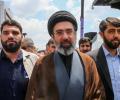
Iran's supreme leader Mojtaba Khamenei on Wednesday extolled the sacrifice and martyrdom of senior Iranian armed forces leaders as the conflict in West Asia enters into its second month.

In a post on Truth Social, Trump said the decision followed a request from the Iranian government and added that talks between the two sides were 'going very well'.

The operation reportedly extended to American assets, with the IRGC claiming that "US military bases in the region, namely Ali al-Salem in Kuwait, as well as al-Minhad and al-Dhafra in the United Arab Emirates, were also targeted."

The ceasefire is still technically holding, to the extent that no overt hostilities have been reported yet, but the rhetoric has hardened dangerously. The week ahead will also clarify whether the Islamabad failure was a negotiating tactic or whether Washington has genuinely locked itself into a position from which the only exits are climb-down, escalation, or the slow bleed of a new status quo that nobody chose and nobody controls. Prem Panicker continues his must read blog on the Iran War.

"The US President's statements are within the framework of efforts to reduce energy prices and gain time to implement his military plans," the ministry stated.

Trump also asserted that US forces had struck hundreds of targets across Iran, including facilities of the Islamic Revolutionary Guard Corps and air defence systems.

It remains unclear whether United States President Donald Trump or Iranian authorities will pursue the offer.

In a bid to de-escalate Middle East tensions, the US has presented Iran with a comprehensive 15-point peace plan focusing on nuclear disarmament and regional stability in exchange for sanctions relief.

Israeli Prime Minister Benjamin Netanyahu has threatened to continue targeting Iranian leaders, claiming recent successes in eliminating key figures. He asserted that Israel, with US support, aims to undermine the Iranian regime and empower the Iranian people.

The Israel Defence Forces (IDF) confirmed the missile launches in a statement on Telegram, noting that defensive systems were actively operating to intercept the threat.

The Iranian embassy also posted a video purportedly showing the aftermath of the strike, with plumes of smoke visible.

For that to happen America does not have to lose. It only has to do the right thing, asserts Aakar Patel.

The IRGC accused US and Israeli forces of using civilians as 'human shields' and warned of continued attacks.

The Islamic Revolutionary Guard Corps (IRGC) has declared the commencement of its 27th offensive under Operation True Promise 4, targeting American and Israeli positions in response to what it termed a new wave of 'unprovoked US-Israeli aggression against the Islamic Republic', Iranian state broadcaster Press TV reported.

The Israeli military said the strike dismantled the bunker during ongoing operations against Iranian military infrastructure.

The IRGC had announced earlier that it was carrying out an intense wave of attacks on US and Israeli positons throughout the region since dawn, using missiles as well as drones.

Iranian Supreme Leader Ayatollah Ali Khamenei has been killed in a US-Israeli attack, sparking celebrations in Iran and raising questions about the future of the regime.

US President Donald Trump is set to provide an "operational update" on the progress of 'Operation Epic Fury' during a national address scheduled for 9 PM Wednesday (US local time).

Iran has launched a fresh wave of missile attacks against Israeli and United States-linked targets as the Islamic Revolutionary Guard Corps (IRGC) said it fired some of its heaviest missiles in the latest phase of its retaliatory campaign, while Israel Defence Forces alleged that many of the projectiles carried cluster bomb warheads.

Russian Foreign Minister Sergei Lavrov will visit Beijing to discuss the West Asia conflict, the Strait of Hormuz blockade, and bilateral relations with Chinese leaders.

'The US was well aware of the nationality of the seafarers on board the vessels. It was not hidden. The nationality of those aboard a merchant ship is known to all the ports.' 'So, why did US shoot a missile that resulted in the deaths of the Indian mariners?'

President Trump has been briefed on potential military actions against Iran, including strikes on infrastructure and control of the Strait of Hormuz, even as negotiations continue. He maintains economic pressure is the primary strategy, while legal questions arise over war powers.

The incident came shortly after a spokesperson from Iran's military warned that Tehran could target ports and docks in the United Arab Emirates following recent United States strikes on Kharg Island, a key hub for Iran's oil exports.

Donald Trump has expressed confidence that Tehran will engage in diplomatic talks, warning that the country will 'see problems' should it refuse to cooperate.

There are enough people at the top decision-making level in Tehran who are still willing to negotiate, provided Trump can create the right setting for the negotiation to acquire a dynamic of its own, points out Ambassador M K Bhadrakumar.

Indian Grandmaster R Praggnanandhaa drew with Vincent Keymer in the third round of the Super Chess Classic, maintaining his position as joint leader alongside four other players.

'Much will depend on the position of the United States.' 'It will have to be seen to what extent the US will be more interested in achieving some form of a deal and to what extent Israel will be allowed to continue to carry out both airstrikes and the killing of Iranian officials.'

The US Central Command (CENTCOM) announced the start of operations to clear mines in the Strait of Hormuz, a claim swiftly denied by Iran, leading to increased tensions in the region amidst stalled negotiations between the two countries.

Italy rejects a proposal by Trump envoy Paolo Zampolli to replace Iran at the FIFA World Cup 2026, as officials insist qualification must be earned on merit.

US President Donald Trump on Wednesday (local time) claimed that Iran has asked US for a ceasefire. He said that Washington would consider it once the Strait of Hormuz is open.

The USS Abraham Lincoln has been operating in the Arabian Sea since the end of January.

Ebrahim Azizi, head of Iran's National Security Committee, stated that diplomatic talks with the US are governed by national interest and security, viewing negotiations as an extension of military efforts.

'The White House lunch that Trump hosted for Munir last year came just after Munir returned from a visit to Iran, at a moment when Israel and Iran were at war.' 'Trump said after that lunch that the Pakistanis know Iran very well. He likely views Munir as a useful interlocutor that can give helpful insights on Iran.'

Taking Kharg would give the US control over virtually all of Iran's oil exports and thus provide significant leverage, notes Prem Panicker in his must read daily blog on the Gulf War. It would also put American troops within range of Iran's remaining missiles, drones, and artillery on a piece of real estate that is just eight square miles in size, and just 15 miles from the Iranian mainland.

Former Central Command chief David H Petraeus suggests the US and Iran are likely to extend their ceasefire beyond the initial two-week period, citing willingness from both sides to continue negotiations.

If Trump wants peace with Iran, Pakistan will offer to help. If Trump seeks Pakistan's aid to spy on Iran, then too Munir will not hesitate to chip in. At the same time, the ISI will not hesitate to tip off Iran now and then, points out M R Narayan Swamy.

India has expressed condolences over the death of Iran's Supreme Leader Ayatollah Ali Khamenei following a joint US-Israel strike, amidst rising tensions in West Asia and criticism over the sinking of an Iranian warship.

In a further escalation of the assault on the heavily fortified site, a missile strike also reportedly targeted the "helipad" at the embassy, as documented by Al Jazeera.
